
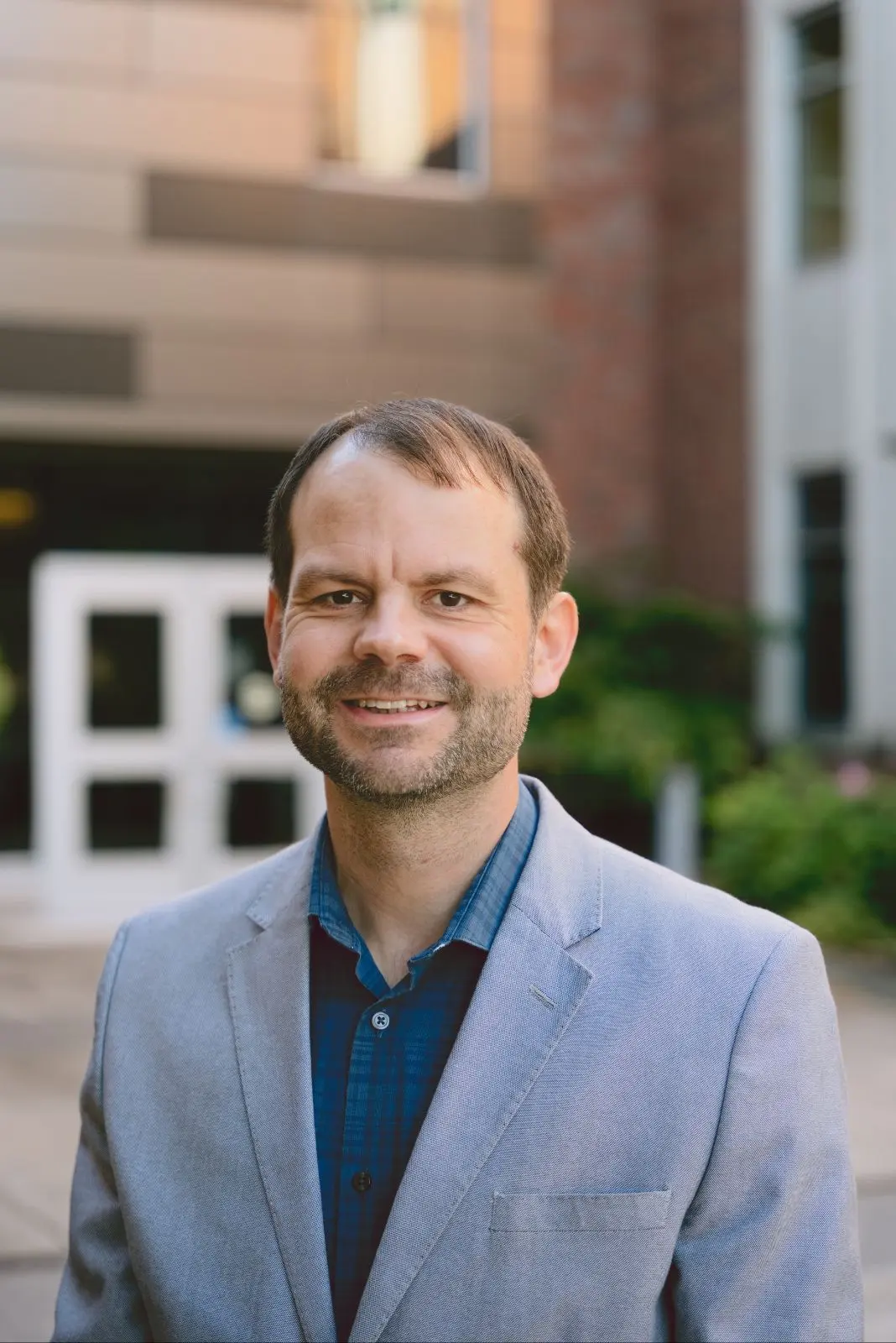
Andrew Semotiuk Ph.D.
Assistant Professor of Biology
- semotiuk_andrew@roberts.edu
- 585-594-6654
Profile
Dr. Andrew Semotiuk brings experience from the lab, the field, and industry to the classroom.
This includes work in molecular biology research laboratories, field sites such as the Sonoran Desert
thornscrub and the Maya Mountains of Belize, and vertical agriculture and seed-breeding startups. He
enjoys studying biology with students at scales from micro to macro. This lets him and his students
explore the interactions of plants and animals in an ecosystem as well as reactions in a test tube. His
real excitement comes from seeing students find the concepts and frameworks that help them reach
their goals.
His research focuses on ethnobotany, the study of plants and people. That work has led to research
articles on how land-use change affects livelihood, how communities use traditional medicine, and how
they harvest and use non-timber forest products. In the lab, studies delve into enzyme inhibition and
cell physiology, specifically growth-factor gradients.
In his free time he enjoys family projects that include hydroponic gardening, raising chickens, and
camping. Aside from projects, he enjoys board games, tea, and swimming. He is the director of the
children’s Adventurer Club at his local church.
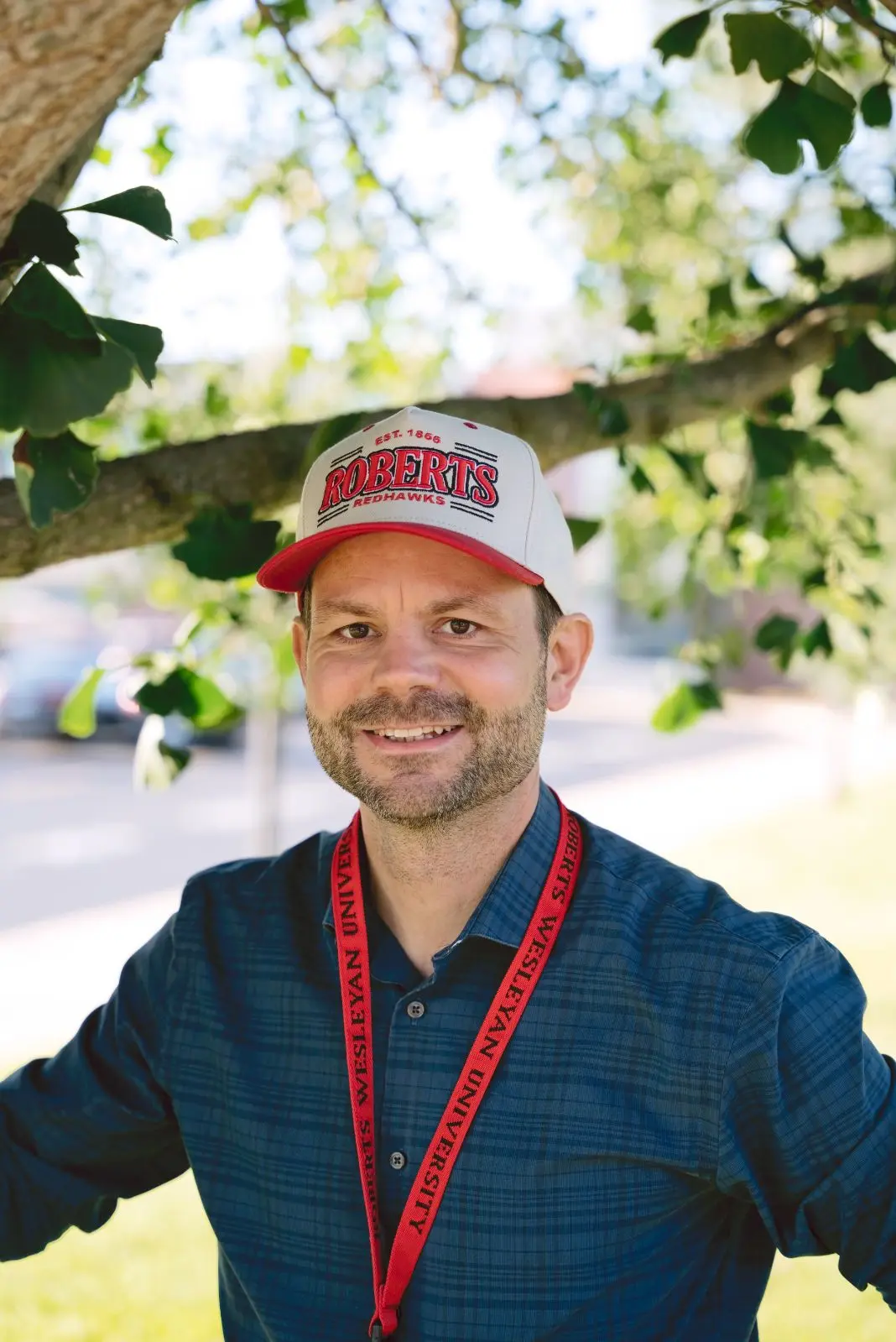
You may spot Dr. Semotiuk collecting botanical specimens near the cross-country trail, and you are
welcome to stop him to ask about the place of plants in our wonderful world.
Courses Taught
- BIOL 2040 Plant Biology
- BIOL 1130 General Biology III
- BIOL 1040 Fundamentals of Life Science
- BCHE 3060 Molecular Biology
- BIOL 3060 Immunology
- BIOL 3020 Genetics
- BIOL 3200 Comparative Anatomy of the Vertebrates
Education
- Ph.D. in Plant Biology | University of California, Riverside
- M.S. in Biomedical Research | Loma Linda University
- B.S. in Biochemistry | Walla Walla University
Sample Publications
Semotiuk, A. J., Ezcurra, E., Colunga-GarciaMarin, P., Ahmad, L., & Cuerrier, A. (2022). An-
cestral traditions of the future: Where is traditional knowledge and practice preservation di-
rected? Ethnobotany Research and Applications, 23(25), 1-23. https://ethnobotanyjournal.org/in-
dex.php/era/article/view/3315Semotiuk, A. J., Hernandez-Romano, E. F., Colunga-GarciaMarin, P., Salazar-Olivo, L. A., &
Ezcurra, E. (2020). The mechanisms of the myth: Ibervillea sonorae inhibits alpha-glucosidase
and stimulates the secretion of insulin in vitro. Journal of Herbal Medicine, 23, 100354.
https://doi.org/10.1016/j.hermed.2020.100354Semotiuk, A. J., Colunga-GarciaMarin, P., Maldonado, D. V., & Ezcurra, E. (2018). Pillar of
strength: Columnar cactus as a key factor in Yoreme heritage and wildland preservation. Ambio,
47(1), 86-96. https://doi.org/10.1007/s13280-017-0940-8Semotiuk, A. J., Semotiuk, N. L., & Ezcurra, E. (2015). The eruption of technology in traditional
medicine: How social media guides the sale of natural plant products in the Sonoran Desert region.
Economic Botany, 69(4), 360-369. https://doi.org/10.1007/s12231-015-9327-6Hubbell, M. C., Semotiuk, A. J., Thorpe, R. B., Adeoye, O. O., Butler, S. M., Williams, J. M., Khor-
ram, O., & Pearce, W. J. (2012). Chronic hypoxia and VEGF differentially modulate abundance and organization of myosin heavy chain isoforms in fetal and adult ovine arteries. American Journal of Physiology-Cell Physiology, 303(10), C1090-C1103. https://doi.org/10.1152/ajpcell.00408.2011Semotiuk, A. J., Cus, M., & Semotiuk, N. L. (2011). Modern education and culture impact on both
language and botanical healing traditions of the Maya in Belize. Acta Horticulturae, 964, 205-210.
https://doi.org/10.17660/ActaHortic.2012.964.25